
Key Takeaways
- Age alone doesn’t determine whether to repair or replace your HVAC system. Its condition, performance, and repair history matter just as much.
- One repair doesn’t necessarily mean you need a new system. But frequent breakdowns and growing repair costs deserve a closer look.
- Think beyond today’s repair bill. Consider future expenses, reliability, comfort, and how long you plan to stay in your home.
- You don’t have to wait for a breakdown to explore replacement. Planning ahead gives you more time to understand your options and make the right decision for your home.
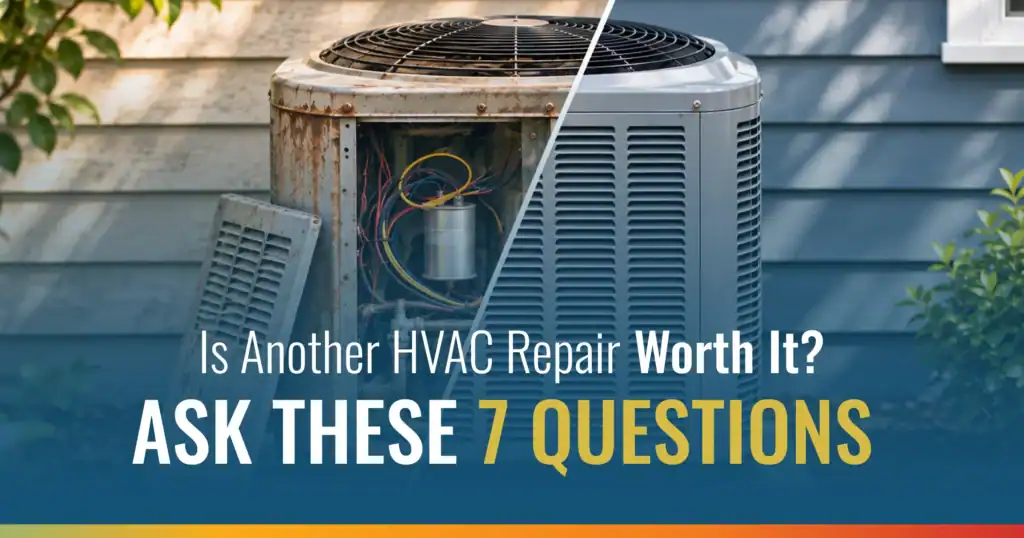
Your HVAC system stops working. Or maybe it’s still running, but your home isn’t as comfortable as it used to be. Now you’re facing a big decision: Is another repair worth it, or is it time to replace your system?
You want to make the right call for your home and your budget. And the last thing you need is pressure to spend money on something you don’t fully understand. The truth is, an older HVAC system doesn’t automatically need replacing. And just because a system can be repaired doesn’t always mean it’s the smartest long-term investment.
The right decision starts with understanding the condition of your equipment, what your options will cost, and what you can expect moving forward. Before you commit to a major repair or replacement, ask these seven questions.
1. How Old Is My HVAC System, and What Condition Is It In?
Age matters, but it doesn’t tell the whole story. Two HVAC systems of the same age can perform very differently depending on how heavily they’re used, how well they’ve been maintained, and what repairs they’ve needed along the way.
Instead of focusing only on how old your equipment is, take a closer look at its condition.
Consider:
- Has the system received regular maintenance?
- Has it been reliable over the years?
- Are major components showing signs of wear?
- Is it still heating and cooling your home effectively?
What matters most is how your system is holding up, not just how many years it’s been running. An experienced HVAC technician can evaluate the equipment’s condition and explain how its age factors into the recommendation.
2. Is This One Repair or Part of a Pattern?
One repair doesn’t mean your HVAC system is on its way out, but it is different from a pattern of breakdowns. If your system has been dependable for years and a single component needs attention, repairing it may be the most practical choice. If you’re calling for service repeatedly, it’s time to look at the bigger picture.
Ask yourself:
- How many repairs have I needed recently?
- Are problems happening more frequently?
- Are different components starting to fail?
- Am I concerned about whether the system will make it through another season?
Frequent breakdowns can be frustrating, especially when you’re never sure what the next repair will cost or when you’ll be without heating or cooling again. They don’t automatically mean you need a new system, but they are a reason to evaluate its overall condition and long-term reliability.
3. What Will This Repair Actually Solve?
Before agreeing to a repair, make sure you understand exactly what you’re paying to fix. Will replacing one component restore dependable operation? Or will it address today’s issue while other worn components may need attention soon?
A good repair recommendation should explain what the repair addresses, what it doesn’t, and what the technician sees in the rest of the system. Ask your technician:
- What’s causing the problem?
- Is the issue limited to one component?
- What condition is the rest of the equipment in?
- What performance can I reasonably expect after the repair?
- Are there other components showing signs of wear?
4. Is My HVAC System Still Keeping My Home Comfortable?
Your HVAC system doesn’t have to break down completely to tell you something isn’t right. Sometimes, the first signs of trouble show up in how your home feels.
You might notice:
- Some rooms are consistently too hot or too cold.
- The system runs longer than it used to.
- Your home struggles to reach the thermostat setting.
- Indoor humidity feels harder to control.
- The equipment turns on and off more frequently.
- Airflow seems weaker in certain rooms.
- Your system is making unusual noises.
These issues don’t always mean replacement is necessary. Some can be corrected through maintenance, targeted repairs, or adjustments to airflow. The important thing is to find out what’s causing the problem. A technician can evaluate your system’s performance and help determine whether a repair will address the comfort concerns or if replacement offers a better long-term solution.
5. What Am I Spending to Keep This System Running?
A repair that’s affordable today may be a smart investment when the equipment is otherwise dependable. But if you’re paying for repeated repairs, dealing with unexpected breakdowns, or noticing higher energy bills, it’s worth looking at the total cost of keeping your current system. Consider:
- What you’ve spent on recent repairs
- Whether repair expenses are increasing
- Potential upcoming repairs
- Changes in energy use and utility costs
- How frequently you’ve needed emergency service
- Whether the system is delivering the comfort and reliability you expect
If you’re considering replacement, compare the upfront investment with the expected benefits of newer equipment, including comfort, efficiency, and reliability. A new system may offer long-term value, but potential savings and performance improvements depend on the equipment, installation, and your home’s needs.
6. How Long Do I Plan to Stay in This Home?
Your HVAC decision should make sense for your future, not just your current equipment. If you’re planning to stay in your home for many years, long-term comfort, energy efficiency, and reliability may be higher priorities. If you’re planning to move sooner, you may approach the investment differently.
Think about:
- How long you expect to stay in the home
- Whether you’re satisfied with your current comfort
- How important improved efficiency and updated features are to you
- Whether you’d prefer to plan for replacement instead of facing an unexpected breakdown
- What investment fits your budget and priorities
The right choice is the one that supports your home’s needs, your plans, and your peace of mind.
7. What Would I Actually Gain by Replacing My HVAC System?
Sometimes, replacement is about improving the way your home feels and performs, even if your system is still in working order. Depending on your current system, the equipment you choose, and your home’s needs, a new HVAC system may offer:
- More consistent heating and cooling
- Improved energy efficiency
- Quieter operation
- Better humidity control
- Updated thermostat and smart-home features
- Improved reliability
- Less concern about recurring repairs
Ask your technician what a new system could improve, what those improvements would mean for your home, and whether repairing your existing equipment is still a reasonable option.
You Don’t Have to Wait for a Breakdown
If your HVAC system is still running but showing signs of age, you have an advantage: time to plan. You can research equipment, compare options, discuss comfort concerns, and understand installation costs without making a major decision during an unexpected breakdown.
That gives you more control over the process and more time to choose equipment that fits your home and budget.
Get Clear Answers Before You Decide
Deciding whether to repair or replace your HVAC system is a big decision. You deserve more than a quick recommendation. At Assured Comfort, we believe you should understand what’s happening with your system, what your options are, and why a particular solution makes sense.
Our HVAC professionals can evaluate your equipment, explain what they find in plain language, and walk you through the considerations that matter most to your home.
Whether a repair makes sense or it’s time to explore replacement, we’re here to help you make an informed decision with confidence.
Clear answers. Straightforward recommendations. Solutions that make sense for your home.
Call 770-282-7341 or contact Assured Comfort to schedule HVAC service in Atlanta.